EFF Management & Distribution: Connecting Flight Planning to the EFB


Updated 4th February 2026
Electronic flight Bags (EFBs) have transformed the way pilots and airlines manage flight operations, replacing traditional paper-based methods with a compact, digital alternative and streamlining the flight phase process.
However, implementing and using EFBs involves meeting regulatory requirements to ensure their effective use while maintaining compliance, operational safety, and data integrity.
This article outlines the key regulatory requirements and best practices for EFBs, from approval to operational integration.
Before airlines and operators can deploy, they must obtain formal approval EFB from their respective aviation authorities. This process involves a thorough demonstration that the EFB system meets all required standards and is safe for operational use.
Authorities such as the Federal Aviation Administration (FAA) in the United States and the European Union Aviation Safety Agency (EASA) in Europe, oversee these approvals.
The approval process ensures that EFBs are not only beneficial but also compliant with regulatory standards, do not compromise flight safety, and support consistent operational procedures.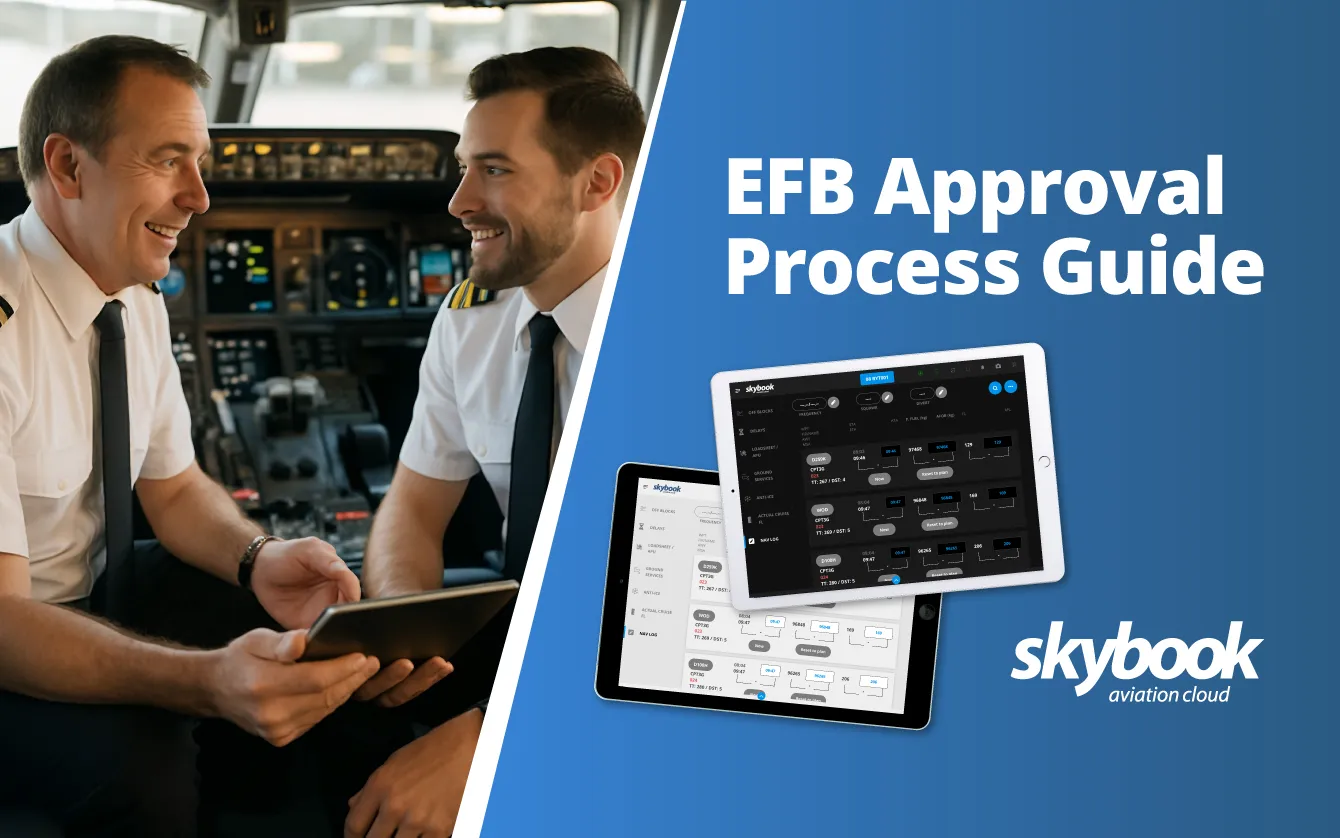
EFB devices must adhere to specific hardware standards to guarantee reliability and safety under various flight conditions.
These standards cover everything from battery life, size, and durability to performance under extreme temperature, pressure and vibration conditions.
Ensuring that the hardware meets these rigorous requirements is crucial for maintaining consistent and safe flight operations and for meeting certification standards set by aviation authorities. Learn more about selecting EFB hardware.
The software running on EFBs is equally important, being certified and validated to ensure it performs its intended functions correctly.
EFB software can include a wide range of applications, such as navigation charts, performance calculations, operation manuals, digital checklists, NOTAM management and workload optimisation tools.
The validation process ensures that the software is reliable, secure, and capable of providing accurate, real-time information to pilots and crew.
Ensuring complete data security in today’s digital age is paramount. EFB regulations require that all data stored and processed by these devices is secure and accurate.
This includes implementing measures to prevent unauthorized access, maintaining encryption standards, and ensuring the data's integrity is maintained through validated updates and audit trails.
Protecting this data is essential not only for operational efficiency but also for maintaining trust, compliance, and safety within the aviation industry. Read further about data security for EFBs.
The introduction of EFB systems requires extensive training and procedural adjustments, and it is a critical component to ensuring the EFB is successfully implemented into the airline.
Flight crews, EFB admins, and other ground personnel must be adequately trained to use these new systems effectively. This training ensures regulatory compliance and consistent operational practices across the airline.
Additionally, airlines need to establish clear procedures for the use and management of EFBs to ensure they are used consistently and correctly. This training and procedural framework is vital for integrating EFBs seamlessly into flight operations.
EFB software providers should offer multiple training options, including on-site or remote sessions, video tutorials, interactive resources, and detailed user guides. skybook EFB, provides comprehensive training to help airlines maximize the value of their digital flight tools.
Check out how our EFB provides added value with training.
EFBs must be smoothly incorporated into an airline's operational procedures. This ensures that the use of EFBs does not interfere with other critical flight operations.
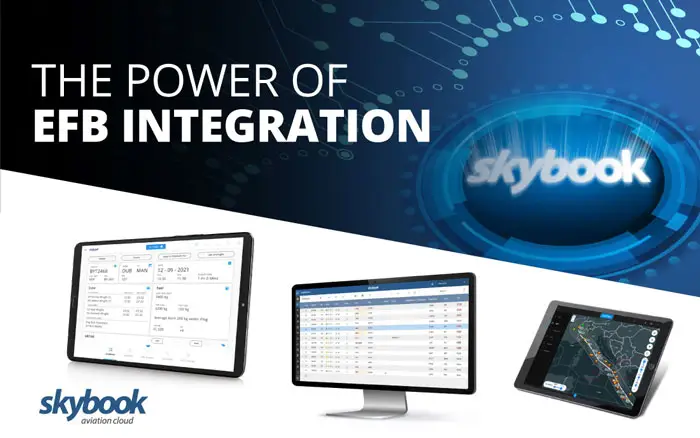
EFBs are also increasingly integrating with other systems to create a more seamless workflow for pilots, which enhances situational awareness. Including charting applications, flight planning systems, weather data, fuel monitoring and aircraft interface devices (AID).
Whilst integrated systems enhance efficiency and decision-making, airlines must also maintain backup procedures and contingency plans to handle any potential EFB failures, maintaining operational continuity and safety. Learn more about the power of EFB integrations.
Scheduled updates are essential to keep EFBs functioning optimally and in compliance with regulatory standards.
This includes regular software updates, hardware checks, system audits, and validation of operational data.
Keeping EFBs up-to-date ensures that pilots have access to accurate and reliable information, enhances operational efficiency, supports regulatory compliance, and reduces the risk of errors.
By adhering to the stringent regulatory regulations, airlines can harness the full potential of Electronic Flight Bags, ultimately enhancing their operations and contributing to safer skies.
As EFB technology continues to evolve, regulatory requirements will also adapt.
Future innovations may include AI-powered flight planning, predictive weather integration, automated compliance checks, enhanced post-flight data analysis, and connected cockpit features. Read more about the future of EFBs.
Why not subscribe to our blog, for more insights and updates on EFB technology, and take the opportunity to learn more about how our skybook EFB enhances operational efficiency and safety.