How to improve airline operational efficiency

Updated November 2026
Every flight generates a significant amount of operational data...
From flight schedules and operational flight plans to weather information, NOTAMs, loadsheets and post-flight reports, airlines rely on multiple systems to keep their operations running smoothly.
Effective aviation data management is about bringing this information together, connecting the systems that generate it and ensuring the right people have access to the right information at the right time.
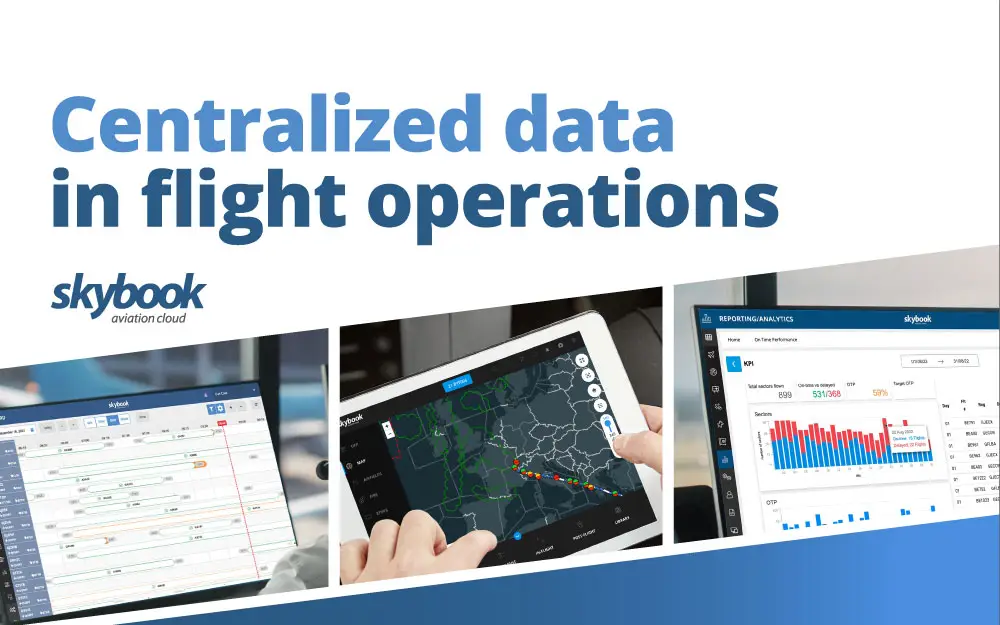
By centralising flight operations data, airlines can streamline workflows, improve operational visibility and make better use of the information generated by every flight.
But how does this work in practice?
Within skybook, operational data is brought together, providing a central point for managing and distributing flight information.
Data can be received through several integration methods, including:
Depending on the integration, information such as flight schedules, operational flight plans, crew rosters, loadsheets, weather data and other flight documentation can be processed and made available to the relevant operational teams.
This helps reduce manual data handling and provides a more connected approach to managing flight operations.
Flight Dispatch & OCC
Access schedules, flight plans, weather, NOTAMs and live flight information.
Flight Crew
Receive briefing information and exchange journey log data through the EFB.
Operations Management
Monitor flight progress, operational changes and delays.
Reporting & Analytics
Access historical flight data and analyse operational performance.
Aviation data management shouldn't stop once information has been delivered to the flight crew.
To get the most value from operational data, airlines need visibility throughout every stage of the flight.
1. Pre-flight: Bringing information together
Before departure, operational information such as flight plans, schedules, weather, NOTAMs and loadsheets can be integrated into a central platform.
Dispatch teams can review flight information, prepare briefing packs and distribute the relevant data to flight crews.

2. In-flight: Keeping operations connected
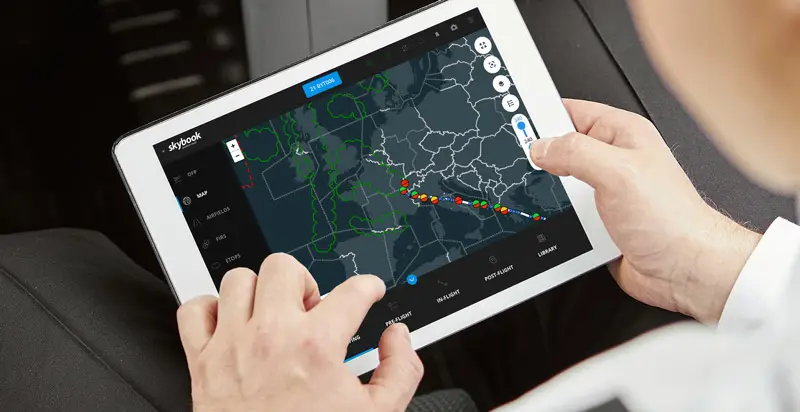
During the flight, pilots use their EFB to access operational information and complete their digital journey log.
Information captured by the crew can be synchronised with ground operations, giving dispatch teams greater visibility of flight progress and operational events.

3. Post-flight: Capturing and analysing data
Once a flight has been completed and signed off, the recorded EFB information is returned to the central system.
This creates a historical record of the flight, which can be used for operational reporting, compliance checks, performance analysis and future planning.
By connecting all three stages, airlines can reduce disconnected workflows and make better use of the data already being generated by their operations.

Every completed flight generates valuable information that can help airlines understand their operational performance.
However, collecting this information is only part of the process. Airlines also need a way to store, retrieve and analyse their flight data.
Within skybook, completed flight information is automatically synchronised from the EFB to the central Ground Portal following flight sign-off.
This information is available through the Record Vault, providing a searchable archive of historical flight records for up to five years.
The data can then be used across several areas of airline operations:
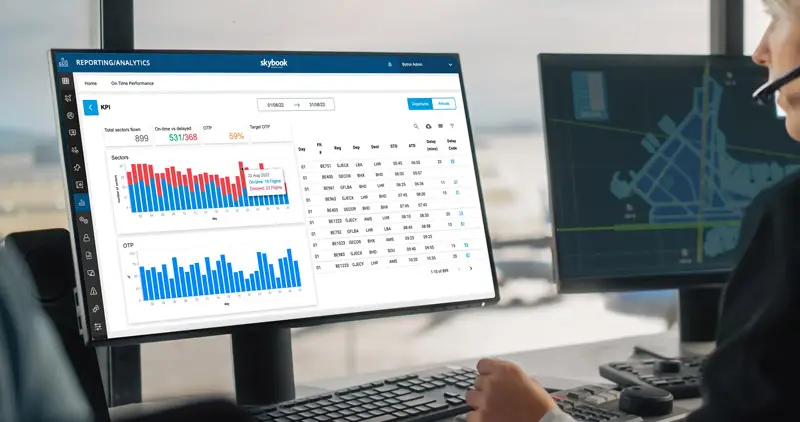
The Reporting & Analytics dashboard turns this information into actionable insights, helping airline teams move beyond simply collecting flight data and start using it to improve their operations.
Having access to operational data is important, but knowing where that information came from, when it was received and what actions were taken is equally valuable.
Flight data traceability gives airlines greater visibility over the information exchanged between dispatch, flight crews and operational systems.
Within skybook, dispatch teams can monitor important flight events through the sector status timeline, including:
This creates a clearer record of activity throughout the flight lifecycle, helping ground teams understand the status of each sector without relying on manual updates.
Historical records can also be retrieved through the Flight Record Vault, supporting audit readiness and operational accountability.
When combined with reporting and analytics, traceable flight data gives airlines a stronger foundation for managing their operations.
Centralising operational information brings significant benefits, but airlines also need confidence that their data is protected and their systems remain available.
skybook is supported by AWS cloud infrastructure, with security and resilience built into the platform.
Bytron's management systems are certified to ISO 27001:2022 and ISO 9001:2015, supporting its approach to information security and quality management.
With a 99.95% software uptime commitment, alongside infrastructure resilience and disaster recovery arrangements, skybook is designed to support the demands of airline operations.
For airlines, this means having a central platform for managing important operational information, backed by established security and quality processes.
From automated data integrations to historical flight records and operational analytics, skybook provides the tools to manage flight information throughout the entire flight lifecycle.
Want to see how connected flight operations could work for your airline?
Request a skybook demonstration