Meet James Murray our Product Analyst
Among some of the most critical operational information in a pilot’s workflow are ATIS, ATC clearance and arrival clearance.
Traditionally handled with pen and paper, ATIS and ATC clearances are now increasingly managed on Electronic Flight Bags (EFBs), transforming how crews capture and interpret this information.
Let’s explore what these are and how the skybook EFB, with its dedicated ATIS and ATC clearance keyboard, can streamline workflows and make a real difference.
Automatic Terminal Information Service (ATIS) is a continuous broadcast of essential airport information, typically received before departure and arrival.
ATIS includes weather conditions, active runways, NOTAMs and operational remarks
Pilots listen to ATIS before contacting ATC, ensuring they already have the latest situational awareness.
ATIS enables pilots to get ready for the assigned runway and expected procedures, cut down on radio traffic with routine information upfront, and enhance safety by keeping crews on the same page.
Here's an ATIS example that a pilot might note:
M 102Z VRB03 FEW030 SCT080 BKN120CB VS TS RA BR TL060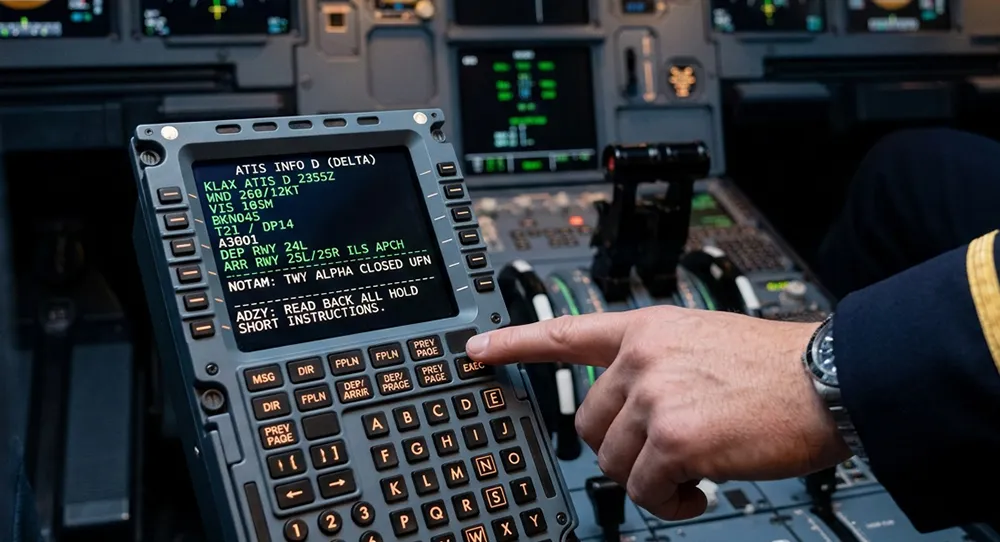
ATC clearance is the formal authorisation from air traffic control for a flight to proceed under specific conditions.
Before departure, the information includes the assigned route, initial altitude, squawk code and departure instructions
Clearance maintains safe aircraft separation and efficient traffic flow, ensures compliance with controlled airspace procedures, and establishes clear communication between pilots and air traffic controllers.
A misunderstood clearance can have serious operational consequences, so accuracy is critical.
Here's an ATC Clearance example that a pilot might note:
CLR EHAM DET2S DEP FL060 SQ4271
Arrival clearance is issued as the aircraft approaches its destination and prepares for descent, approach and landing.
It may include STAR (Standard Terminal Arrival Route), Approach type (ILS, RNAV, etc.), Transition instructions and speed and altitude constraints.
Arrival clearance enables pilots to set up the aircraft in advance, conduct a thorough approach and anticipate workload effectively during the critical landing phase.
Despite the rise of digital tools, many pilots choose to jot this information down on paper. Although capturing ATIS and ATC clearances directly onto an EFB application can offer significant advantages:
Accuracy & legibility
No more misread handwriting or lost notes, everything is clearly stored, editable and accessible.
Workflow integration
Data entered into the EFB can feed into performance calculations, update briefing tools and support compliance, flight records and audit trails
Reduced cognitive load
Pilots don’t need to mentally juggle multiple pieces of information; everything is structured and visible.
Better crew coordination
Both pilots can review, confirm and sync the same EFB data, improving cross-checking.
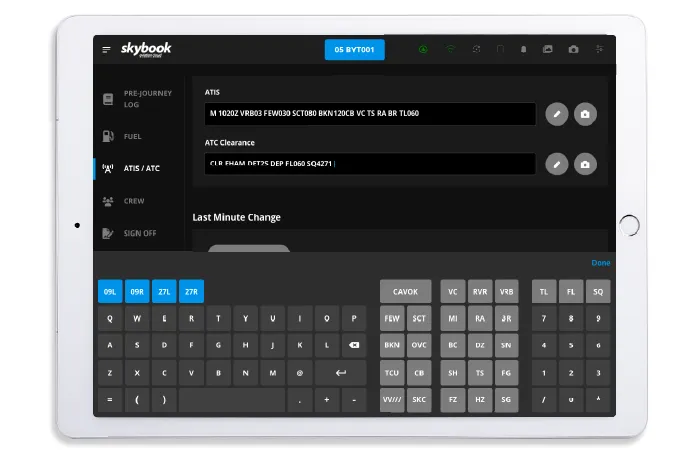
Standard keyboards weren’t designed for aviation workflows…
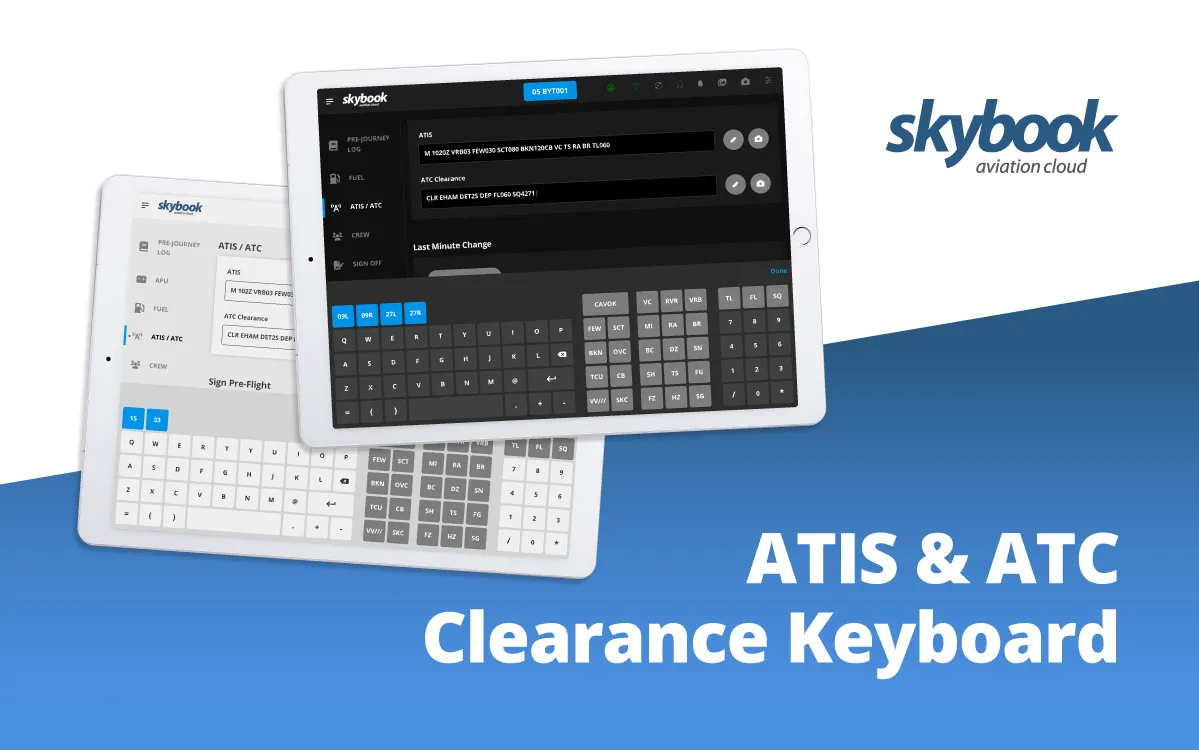
That’s why the skybook EFB includes a custom ATIS and ATC clearance keyboard within the Journey Log, designed to transform the way pilots capture information, improving speed and workflow efficiency.
The custom keyboard offers pre-formatted fields, such as runway, weather, and squawk. Along with quick-select options for common entries and aviation specific abbreviations.
This allows pilots to enter information with just a few taps instead of typing full phrases, reducing screen time and eliminating the risk of unclear handwriting. (An option for camera or scribble pad is also included)
ATIS, ATC clearance and arrival clearance are essential to every flight, but the way this information is recorded and used is advancing.
In a cockpit where every second counts and clarity is crucial, how pilots interact with data is just as important as the data itself.
With skybook, improving workflow efficiency for pilots and streamlining data capture for operations is central to safer and more effective flight management.