Meet James Murray our Product Analyst
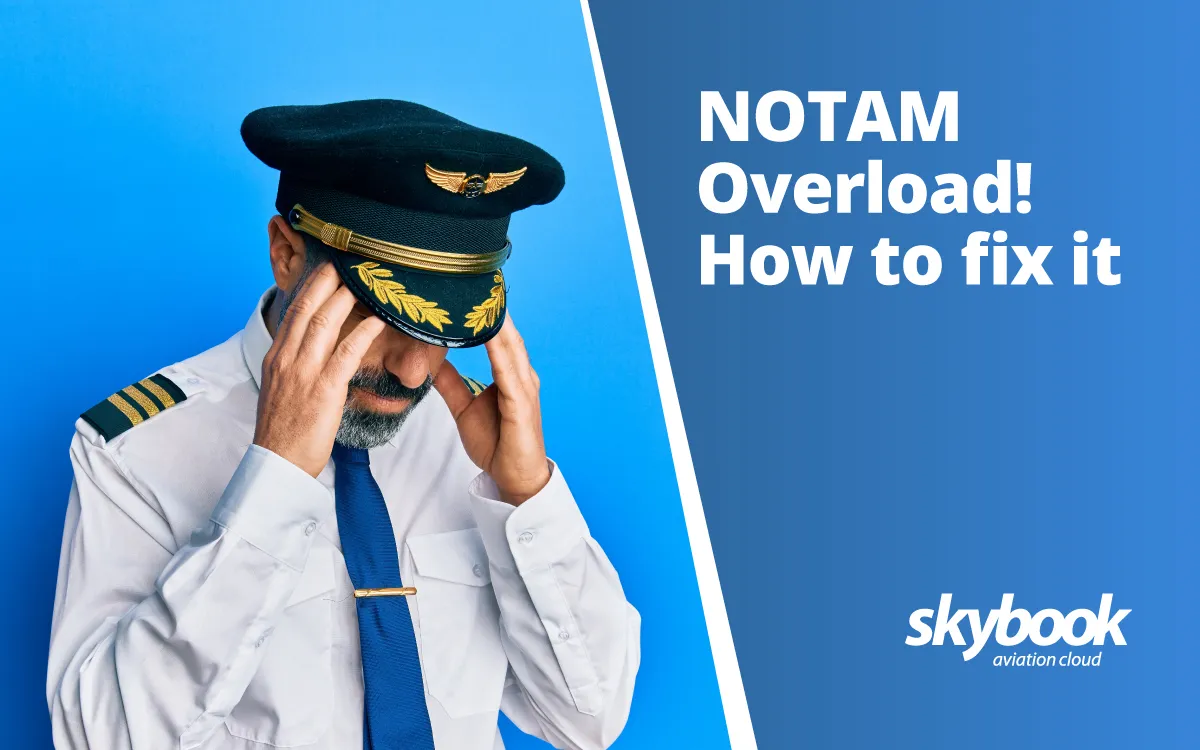
In recent years, NOTAM overload has become a recognised industry concern, prompting regulators, safety boards and airline operators to push for better management and filtering tools.
This is exactly where modern NOTAM management systems, such as skybook NOTAM Watch, can transform the workflow for both dispatchers and flight crews.
In this article, we’ll break down why overload happens and how airlines can fix it using smarter filtering, automation and EFB integrated workflows.
In theory, NOTAMs should provide essential, safety-critical information that helps crews operate confidently and accurately. In practice, however, NOTAMs have become a classic example of information overload...
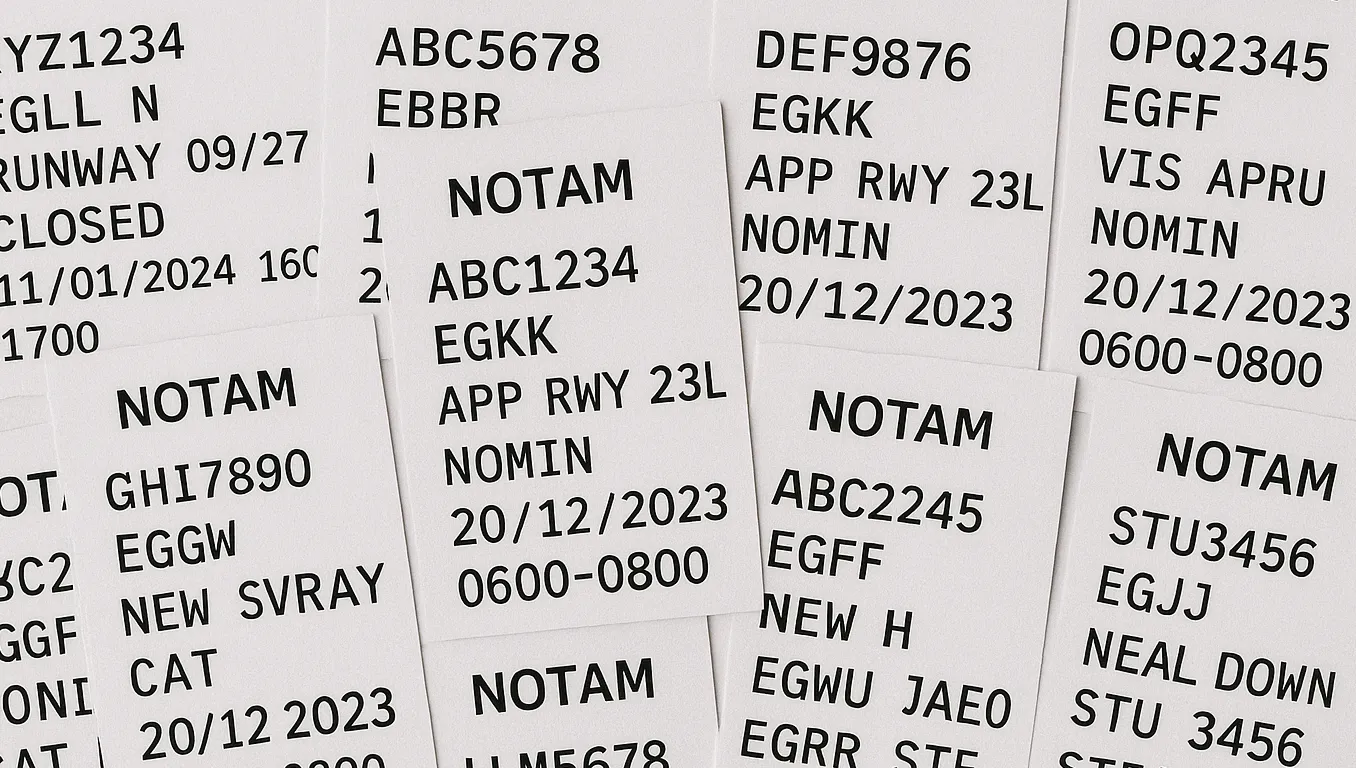
Thousands of NOTAMs are active globally at any moment!
They cover a wide spectrum of issues such as runway closures, navigation aid outages, construction works, airspace restrictions, maintenance tasks, temporary obstacles, lighting failures and more.
Airlines can frequently find themselves sifting through dozens, sometimes hundreds, of NOTAMs per flight, many of which have little or no operational relevance.
The sheer quantity means even flights with straightforward routes can receive large NOTAM packages containing far more information than necessary.
One of the core issues is that NOTAMs are delivered as raw data. The format is standardised, but the importance isn't. Safety-critical information might sit next to a minor administrative notice.
This lack of prioritisation forces dispatchers and pilots to manually determine which NOTAMs truly matter; a slow, error-prone step that increases cognitive load.
Traditional briefing systems provide NOTAMs based on broad criteria, often including anything related to:
But without intelligent filtering, this results in notices that don’t impact the specific aircraft, timeframe, or route. Crews may scroll past pages of irrelevant advisories before finding what genuinely matters.
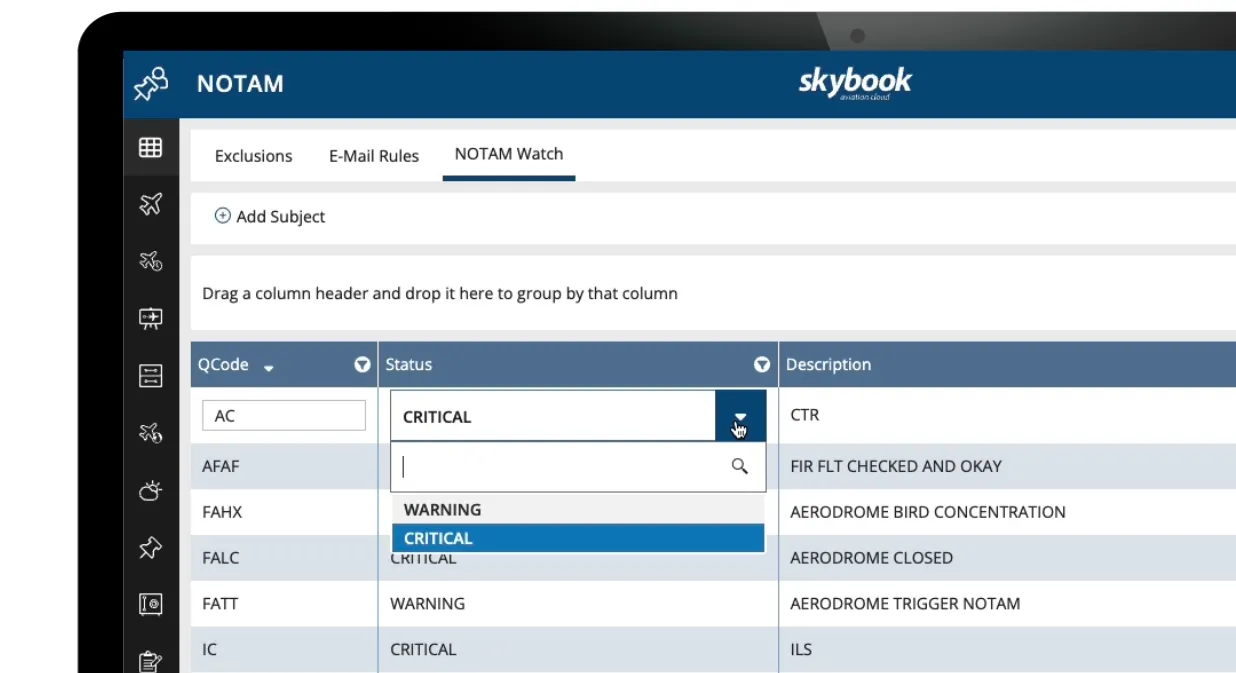
The infamous NOTAM format! Dense blocks of text, cryptic abbreviations, and complex Q-codes; naturally adds friction.
Add duplicates or repeatedly updated notices and crews face unnecessary repetition and clutter.
Airports, airspace managers and ANSPs (Air Navigation Service Provider) update NOTAMs frequently, sometimes minutes before departure.
Without automated updating and alerting, flight crews may not see or acknowledge changes until it’s too late.
These factors combine to create one predictable outcome, NOTAM overload.
It’s not only an administrative issue, it's a huge safety issue!
NOTAM overload places responsibility on humans to identify meaningful information inside a sea of irrelevant data.
In modern operations, that’s no longer sustainable… especially when airlines are expected to improve safety margins, modernise workflows and strengthen digital transformation initiatives.
NOTAM overload is not solved by adding more information, it’s solved by delivering the right information, to the right people, at the right time.
A dedicated NOTAM Management System, changes the process from reactive filtering to proactive, automated intelligence, here's how:
skybook NOTAM Watch brings structure to workflows by automatically gathering NOTAMs for each flight or operational area and applying intelligent filtering rules.
This removes the irrelevant noise before the briefing is ever delivered to the crew, which results in…
Clearer and smart NOTAM briefings where critical information stands out immediately.
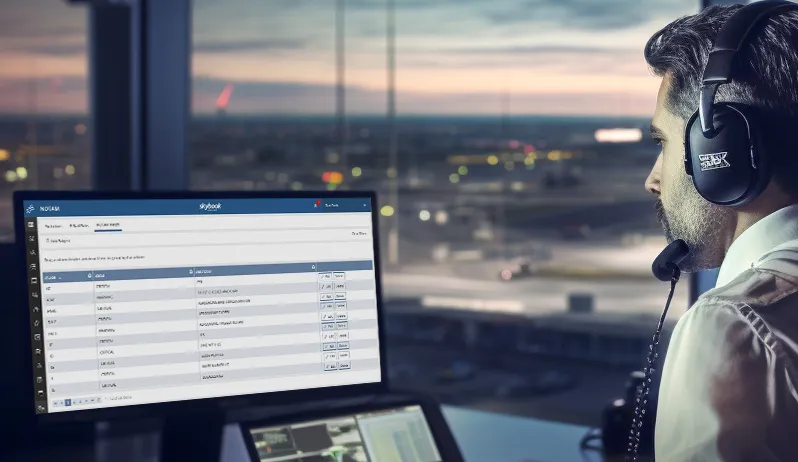
NOTAMs can change at any point during the flight lifecycle. skybook NOTAM Watch supports real-time alerts so dispatchers and pilots are notified instantly when a new or updated NOTAM becomes relevant during flight watch duties.
For example:
With alerts built into the workflow, operators maintain stronger situational awareness and can take timely action.
Filtering is powerful at dispatch, but it’s equally valuable in the cockpit.
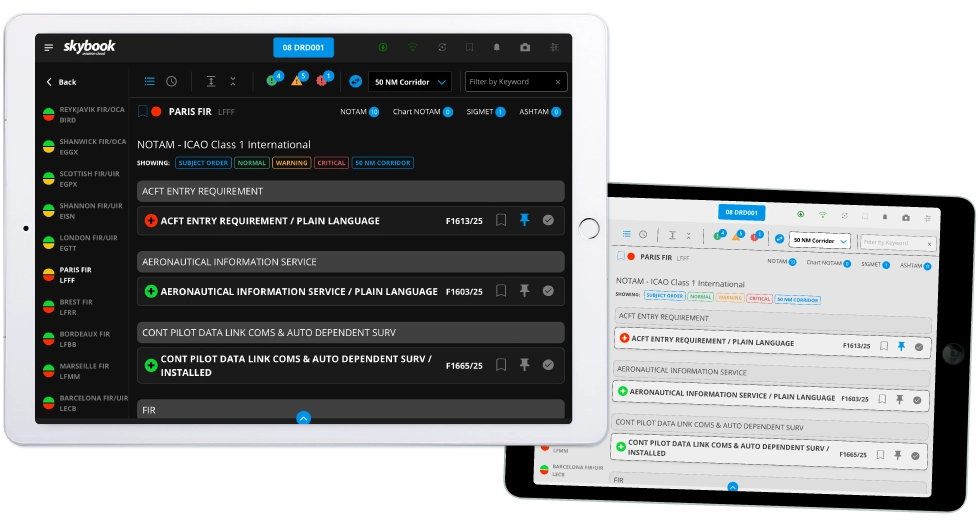
On the skybook EFB application, intelligently filtered and prioritised NOTAMs make briefing packs simpler to navigate and centred on what truly impacts the operation.
Key benefits for crews:
This eliminates the scrolling fatigue that comes from traditional NOTAM briefings.
By organising NOTAMs consistently across OCC, dispatch and cockpit workflows, this ensures:
Airlines also benefit from clearer reporting and easier training for new dispatchers or crew.
Airlines using skybook NOTAM Watch have reported situations where real-time NOTAM alerts helped prevent major operational disruptions.
In one case study from Nesma Airlines, a new hazard NOTAM was issued for a destination airport shortly before arrival. skybook’s alerting allowed the OCC to notify the flight immediately and adjust the operational plan, reducing follow-on disruption.
We have a had a flight called back following an eruption of a volcano in Italy which closed our destination, luckily with NOTAM watch we were the first to know and called the flight back hence reducing disruption over all the fleet.
Ahmed Hassan Manager, OCC Nesma Airlines
This demonstrates how improved NOTAM clarity can directly support operational control and passenger outcomes.
 Best practices for reducing NOTAM overload
Airlines can fix NOTAM overload by combining effective technology with strong process design:
Use a dedicated NOTAM management system
Avoid relying on raw data dumps or manual compilation.
Apply filtering based on airline-specific needs
Set NOTAM filtering rules such as: Time-based, Series, Airfield / FIR, Q-Code, QFIR and keyword.
Ensure EFB integration for pilots
Give crews the option to filter NOTAMs by keyword, severity level and Nautical-Mile Corridor. And the ability to mark as read, pin and bookmark; rather than overwhelming them during pre-flight.
Adopt real-time alerting workflows
Maintain situational awareness from pre-flight through enroute.
Review filters regularly
Operational environments change, your NOTAM rules should be reviewed and evolve with them.
With the right tools, airlines can transform NOTAMs from an overwhelming list of mixed priority messages into a structured, safety-focused workflow.
Book a trial to see how skybook can eliminate NOTAM overload from your operation.